
During a televised address, Kuleba accused Russia of violating the ceasefire agreements and urged it to stop shooting to allow civilians, including foreign students, to evacuate.

Samdong Rimpoche's visit to China materialised against the backdrop of strained India-China relations consequent to the face-off between Indian and Chinese troops at Doklam, says former RAW officer Jayadeva Ranade.

'The immediate attempt by China is to get its way and gain territory through small steps without having a full-scale war.'

Experts believe that though the fastest-growing economies of China and India have suffered some moderation, they are showing much more endurance than the other two countries in the BRIC pack -- Brazil and Russia. India's GDP growth has contracted from a quarterly peak of 9.7 per cent in the fourth quarter of 2006-07 to 5.3 per cent in the third quarter of the current fiscal, pulled down by decline in manufacturing and farm production.

India and China would hold their annual counter terrorism dialogue this week during which the two are expected to focus on Islamic militant groups in the backdrop of US plans to pull out its troops from Afghanistan next year.
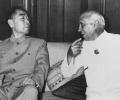
'The war of 1962 exposed the hollow intellectual foundations of Nehruvian foreign policy, especially vis-a-vis China and that is why it was such a shock.'

Wang arrived in Delhi on Thursday evening in the highest-level visit between the two countries after the ties came under severe strain following the military standoff in eastern Ladakh that began nearly two years ago.

'China made it evident that neither the swing-ride at Ahmedabad nor the red carpet at New Delhi worked, by timing its muscle-flexing in Ladakh to coincide with Xi's visit.'
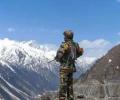
Asserting that sovereignty and territorial integrity of China are "sacred and inviolable", the country's national legislature has adopted a new law on the protection and exploitation of the land border areas, which could have bearing on Beijing's border dispute with India.
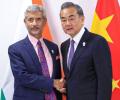
China will always try to set the agenda for negotiations and tries through such means to determine the direction of talks, and to avoid discussing subjects that may paint it into a corner or compel the Chinese negotiator to disclose their position prematurely.

Warning that India and China could ill-afford misperceptions on policy, National Security Advisor Shivshankar Menon on Thursday said that pursuit of an ambitious agenda by the two countries could put bilateral relations on a sound footing.

'India stands to gain immensely by forging a developmental partnership with China.' 'While through sustained strategic communication there is scope to steadily expand the commonality of interests between the two countries.' 'This is also a practical way to ensure that differences do not get over-magnified and become disputes,' says Ambassador M K Bhadrakumar.
In the backdrop of External Affairs Minister SM Krishna's visit to China, The two countries have signed an agreement on Wednesday to establish a hot line facility between the two prime ministers.

The relation between India and China has broad influence on Asia's security and the United States will continue to engage with them to encourage regional stability, the nominee for the Pentagon's top policy post for the Asia-Pacific region said.

Chinese President Xi Jinping is all set for an unprecedented third five-year term as he was 'elected' to the powerful Central Committee of the ruling Communist Party on Saturday while several top leaders including Premier Li Keqiang have been left out in the major shake-up at the top.

'Even though as Xi will seemingly continue to stay in power beyond his third term, competitions for the post-Xi leadership would be inevitably unfolded beneath the surface of water, and that will be a big headache for Xi the dictator.'

India has made it clear to China that peace and tranquillity in border areas is essential for the development of overall bilateral ties and the relationship has to be based on the 'three mutuals' of respect, sensitivity and interest, Foreign Secretary Harsh Vardhan Shringla said.

"When you have two relatively large economies growing at 7 and 10 per cent, respectively, India and China, they are contributing quite a lot to global growth," IMF deputy director, Asia and Pacific department, Kalpana Kochhar, said during a teleconference in Washington.

'If the Chinese military gets hold of some western sectors on the India-China boundary, it will give them added military advantage.'
This is the first time such a bilateral dialogue focusing on Central Asia where the two countries have long and historical ties was held, reflecting deepening diplomatic engagement between the two neighbours even as they try to sort out friction resulting from recent reported incursions by Chinese troops along the Ladakh border

Eleven countries voted in favour of the resolution while three countries - India, China and the UAE abstained.

In his address to RIC Foreign Ministers, Wang said the three countries should 'correctly handle and properly deal with sensitive factors in bilateral relations and safeguard the overall interests of mutual relation', without directly referring to the current round of India-China military tensions along the Line of Actual Control, (LAC).

The US actions can be seen as a riposte to India's neutral position on the Ukraine crisis, its continuing import of Russian arms and oil thus undermining Western sanctions, argues Colonel Anil A Athale (retd).
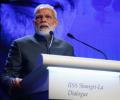
"No other relationship of India has as many layers as our relations with China. We are the world's two most populous countries and among the fastest growing major economies. Our cooperation is expanding," he said.

Modi was expected to arrive in Wuhan in the evening on April 26 and join Xi in the informal summit at a picturesque location the next day.
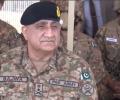
The chief of the army staff said that with one-third of the world in the Gulf region and elsewhere involved in some sort of conflict and war, "it is important that we keep the flames of fire away from our region."
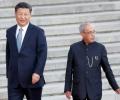
In his 50 years in politics, he made positive contributions to China-India relations, Chinese Foreign Ministry spokesperson Hua Chunying said.
India and China will hold a new round of negotiations on the vexed border issue which is an area of 'differences and divergences' despite bilateral relations having witnessed 'visible improvement', External Affairs Minister Pranab Mukherjee said on Tuesday. He said both countries have an established mechanism at the level of special representatives to deal with the border issue at the political level. "They have completed 12 rounds of talks," he said.

'The Chinese made their point repeatedly after August 5. They backed Pakistan more overtly than in the past.' 'Kashmir is not completely off their radar. But in order to keep the atmosphere surrounding the Chennai meeting, they did not discuss Kashmir.'

'It is not a matter of fixing the military problem up there in the Himalayas and the retreat of the two militaries.' 'India has to find a way to correct the racist and very patronising views of India in the Chinese mind.'

In continuation of the series of joint exercises between India and China, the exercise 'Hand-in-Hand 2014' is all set to commence at Pune's Aundh Camp on November 16.
The aim of the dialogue is to broaden the scope of the blooming bilateral relationship, allowing both sides to exchange notes on global and regional security issues.

'Isn't it in India's long-term interests that Tibet-related issues do not remain a point of discord in Sino-Indian relations?' asks Ambassador M K Bhadrakumar.
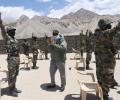
Only he, with his tremendous political capital and personal stature, can pull it off, observes B S Raghavan, the veteran civil servant.

'This special meeting reiterates our belief in the time-tested principles of international relations'

'Chinese troops are not geared to fight Indian troops who are battle hardened and acclimatised and are far more hardy.'
The simultaneous rise of China and India is phenomenal, but serious concerns also arise on the bilateral relationship. After all, the lingering border dispute, geopolitical mismatches, inevitable conflict of interests, and a huge trust deficit between the two nations could all trigger tensions and even confrontation, bringing about disastrous consequences to both countries and the entire region.
India and China held their fourth round of strategic dialogue to discuss a host of issues such as New Delhi's concerns relating to issuance of stapled visas by Beijing for Kashmiris and its bid for a permanent seat on the UN Security Council.
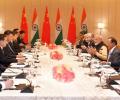
The prime minister started off his remarks at the meeting in Tamil, welcoming China to the talks, which were held right after one-on-one discussions between Modi and Xi at the Taj Fisherman's Cove Hotel.
 © 2026 Rediff.com - Investor Information - Advertise with us - Disclaimer - Privacy Policy - Sitemap - Feedback - About us - Terms of use - Grievances